Cherry blossom, bullet trains, a go-kart through Shibuya dressed as a Minion — and the city we checked out of early. Here's the Japan route that actually worked."
Japan was the trip we'd talked about for years before we actually booked it. One of those destinations that sits on the list looking slightly intimidating — the language barrier, the complexity, the sheer amount of it — until one day you just commit and figure it out as you go.
We went for two weeks during cherry blossom season. We came back having decided, without much deliberation, that Japan is probably the most extraordinary country we've ever visited. We also came back having checked out of one hotel early, abandoned an entire city, and jumped on a bullet train back to Tokyo because we'd made a mistake. More on that shortly.
Here's the honest version of how it went.
The Route
Two weeks. Five destinations. Tokyo, Kyoto, Nara, Hiroshima, and Osaka — in roughly that order, with the Japan Rail Pass doing most of the heavy lifting between them.
It's a well-trodden circuit and there's a reason for that. It works. Each city is different enough from the last that you don't get the sense of repetition you can get doing multiple cities in, say, Europe. Tokyo and Kyoto feel like they exist in entirely different versions of Japan.
If you're planning a similar trip, this is a route we'd recommend without hesitation — with one adjustment we'll get to.
Tokyo: Give It More Time Than You Think
We bookended the trip with Tokyo — a few days at the start, a few days at the end — and it was the right call. Tokyo is one of those cities that rewards return visits within the same trip. You see it differently once you've been out into the rest of the country and come back.
Tokyo is enormous and relentless and surprisingly easy to navigate once you've made peace with the metro system. The food is exceptional at every price point. The organisation of everything — trains, queues, service — is the kind of thing that makes you quietly furious about infrastructure back home.
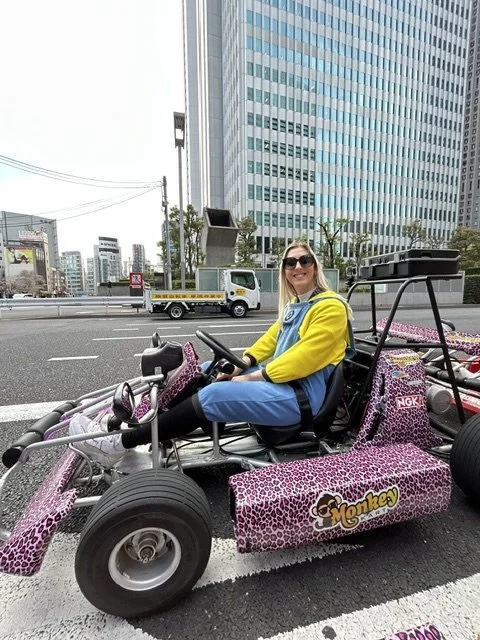
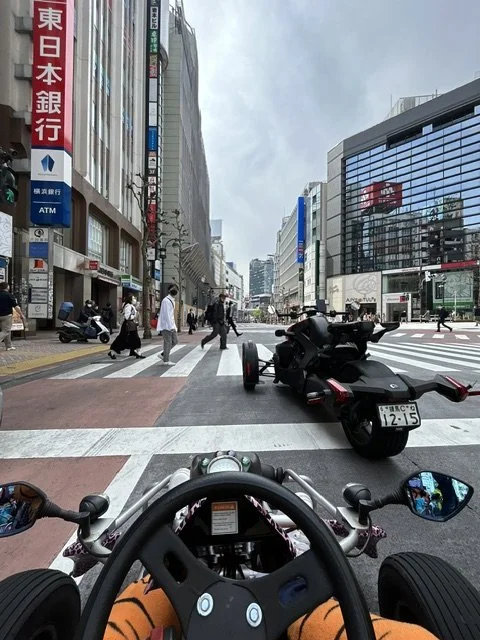
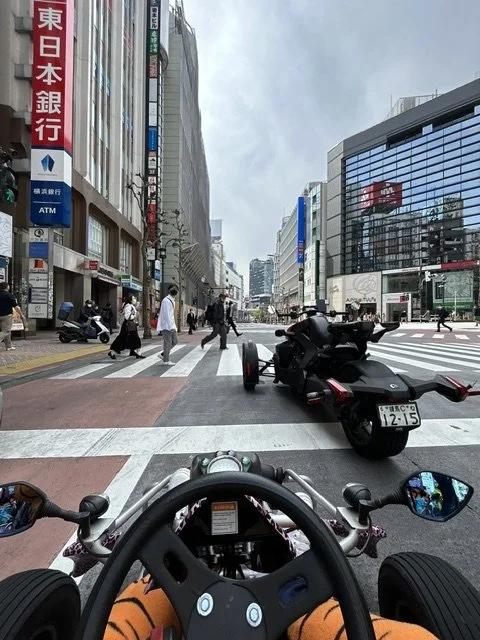
The highlight nobody told us about: We did the Mario Kart experience through the centre of Shibuya. You dress up in a onesie — full character costume, whatever you choose from a fairly extensive wardrobe — climb into a go-kart, and drive in convoy through the streets of one of the most famous cities in the world. Through the Shibuya crossing. In costume. In actual traffic.
It is completely, wonderfully absurd. We cannot recommend it highly enough. There is no dignified way to do it and that's entirely the point. If you're the kind of couple that would feel self-conscious about it, do it anyway. You'll be delighted you did.
Tokyo Disney was also, for the record, excellent — but we'll come back to why that matters in the Osaka section.
Cherry Blossom Season: Not Overhyped For Once
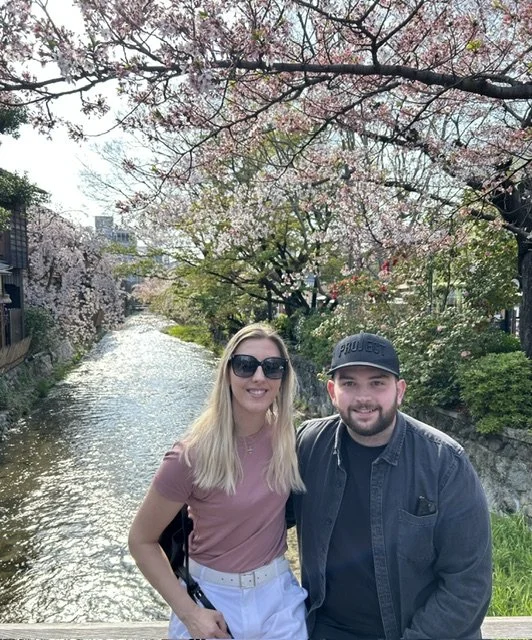
We went in early April, which lined up almost perfectly with peak bloom. Japan during cherry blossom season is one of those rare travel experiences that actually lives up to the pictures.
The thing that gets you isn't any single tree or park — it's the cumulative effect. Blossom on temple grounds. Blossom along river banks. Blossom framing a view of a mountain. After a few days it starts to feel like the entire country has been lightly decorated for your benefit.
Maruyama Park in Kyoto at night, with the weeping cherry tree illuminated, was the single most beautiful thing we saw on the trip. We weren't prepared for it. Neither will you be.
The practical note: cherry blossom timing is unpredictable and varies by a week or two each year. Track the forecasts in the months before you go — the Japan Meteorological Corporation publishes predictions and they're taken extremely seriously. Book accommodation well in advance. This is not a season to leave things until the last minute.
The Japan Rail Pass: Worth It, Full Stop
We agonised over this before we left — the pass isn't cheap and there's a lot of conflicting advice online about whether it makes financial sense.
For a two week trip covering Tokyo, Kyoto, Osaka and Hiroshima, it makes sense. The maths works out and the convenience factor is worth something on top of that. You simply tap in, get on, and go — including the Shinkansen bullet trains between cities, which are an experience in themselves.
The bullet train is one of those things that sounds like a practical detail until you're on one doing 320km/h through the Japanese countryside with Mount Fuji sliding past the window and you realise this is actually one of the highlights of the trip. Smooth, silent, on time to the minute, and more comfortable than most long-haul flights we've taken.
Practical note: You need to buy the JR Pass before you leave home — it's not available for purchase in Japan. Order it with enough lead time.
Kyoto: Everything They Say, and Then Some
Kyoto is where Japan starts to feel ancient in a way Tokyo doesn't. The temples, the geisha districts, the moss gardens, the bamboo groves — it sounds like a lot to pack into one city and it is, but Kyoto earns every bit of the reputation.
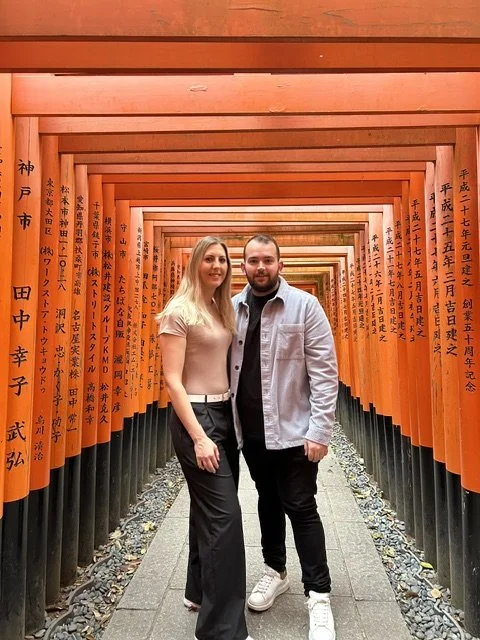
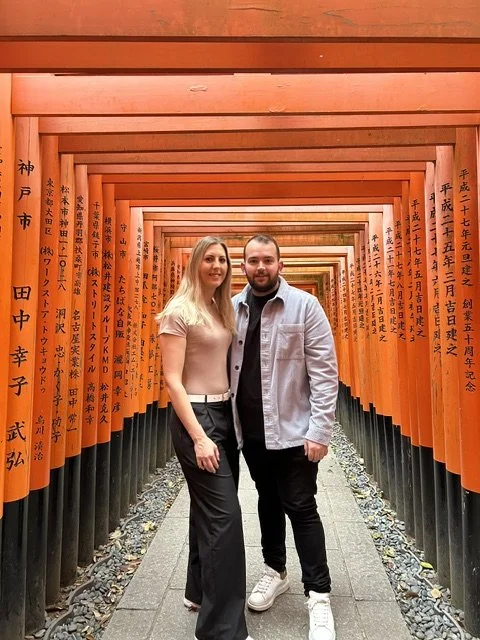
Arashiyama bamboo grove is extraordinary at dawn and genuinely underwhelming at noon when it's packed with tour groups. Fushimi Inari — the thousands of torii gates winding up the mountain — is worth doing in full rather than just photographing the famous opening section and leaving, which is what most people do. Give it two hours. Go further up than feels necessary. It gets better.
We could have spent an extra day in Kyoto without any difficulty. If your itinerary is tight, this is where to add time rather than remove it.
Nara: The Day Trip That Earns Its Place
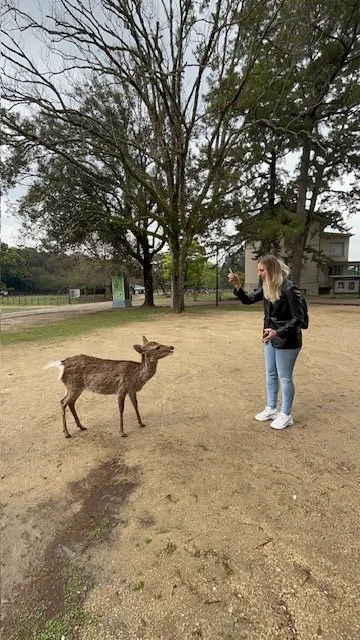
Nara is an easy day trip from Kyoto — under an hour on the train — and deserves its place on the itinerary for one very specific reason: the deer.
Nara Park is home to over a thousand wild deer who wander freely through the grounds, have lost essentially all fear of humans, and will very calmly mug you for the deer crackers you can buy at the entrance. They bow when they want food — genuinely, they bow — and will headbutt you when they feel you're taking too long to produce it. It's delightful in a slightly unnerving way.
Beyond the deer, Todai-ji temple — housing the largest bronze Buddha in Japan — is worth the visit. It's enormous in a way that photographs don't quite communicate.
Nara doesn't need more than a day but it absolutely deserves one.
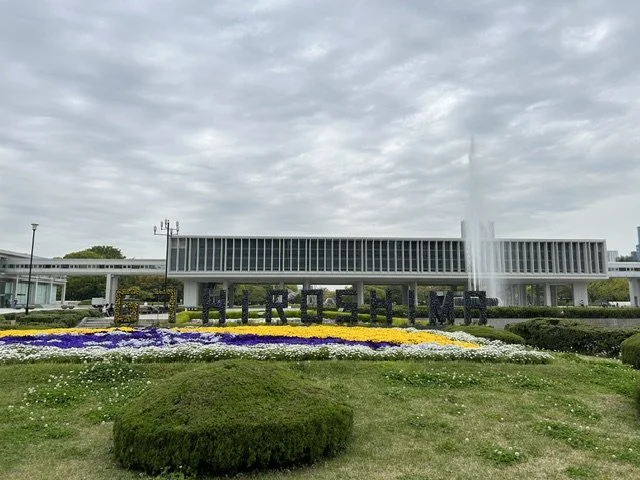
Hiroshima: The Most Important Stop on the Route
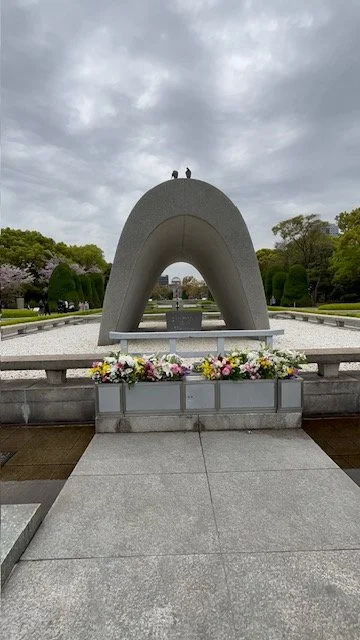
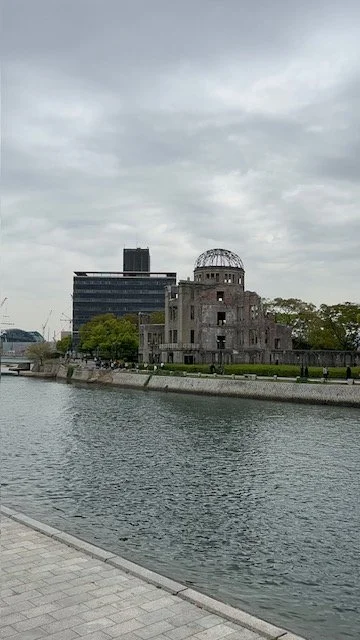
Hiroshima is not an easy place to spend time. It's also unmissable.
The Peace Memorial Museum is the most sobering thing we've done on any trip anywhere. It takes about two hours and you come out quieter than you went in. We're not going to try to summarise it here — just go, and give it the time it deserves.
What surprised us about Hiroshima as a city is how alive it is. There's a tendency to think of it only through the lens of its history, but modern Hiroshima is a genuinely lovely, relatively relaxed city with excellent food and a very different feel to the intensity of Tokyo. Okonomiyaki — Hiroshima's signature savoury pancake — is something we still think about.
What we'd do differently: we didn't make it out to Miyajima, the island a short ferry ride from Hiroshima with the famous floating torii gate at high tide. Time simply ran out on this leg of the trip, and it's the one genuine gap in the itinerary we'd go back to fix. If your schedule allows it, build in the extra half-day — we've heard nothing but good things, and it's firmly on the list for next time.
Osaka: The Honest Truth
Let's talk about Osaka, because this is where we'd tell you something most Japan blogs won't.
We went to Osaka primarily for Universal Studios Japan. We'd heard good things, we were excited, and we had a day booked. It was, for us, a significant disappointment. The queues were relentless, the park felt crowded beyond enjoyment, and the experience didn't justify the time we'd taken away from everything else Japan had to offer. We accept that theme parks are subjective and that plenty of people love it. For us, it wasn't right for this trip.
Osaka itself is fine. The food scene is genuinely excellent — takoyaki, kushikatsu, the street food around Dotonbori — and it has a louder, brasher energy than Kyoto that some people prefer. But for us, after the temples and mountains and bullet trains and bamboo groves, it felt like a step sideways rather than forward.
We made a decision. We checked out of our Osaka hotel early, carried our bags to the station, and got on a bullet train back to Tokyo. We spent the time we'd saved going to Tokyo Disney instead, which was considerably more fun than Universal had been, and felt like exactly the right way to spend our final days.
The lesson: Don't be afraid to edit your itinerary on the ground. The plan you make at home is made with incomplete information. The plan you make when you're actually there, knowing what you know, is usually better.
If we did this trip again, we'd spend less time in Osaka — or skip it entirely — and use those days in Kyoto or back in Tokyo. That's not a criticism of the city. It just wasn't the right fit for this particular trip.
"The plan you make at home is made with incomplete information. The plan you make when you're actually there, knowing what you know, is usually better."


The Thing That Surprised Us Most: The People
Japan has a language barrier. We're not going to pretend otherwise — navigating it without any Japanese requires patience, a translation app, and occasionally a lot of mutual goodwill on both sides.
What we weren't prepared for was quite how warmly that goodwill was extended. Consistently, everywhere, from the station staff who walked us to the right platform rather than pointing at a sign, to the restaurant owner who drew us a map of dishes she thought we'd enjoy, to the strangers who stopped us in the street to ask if we needed help when we were visibly confused.
Japan is a country that takes hospitality seriously in a way that's different from anywhere else we've been. Not performative. Not transactional. Just genuinely, quietly helpful. It's one of the things that makes you want to go back.
The Practical Bit
When to go: Cherry blossom (late March to mid April) is spectacular but busy and requires advance planning. Autumn (November) offers similarly dramatic scenery with fewer crowds. Both are worth the effort
How long: Two weeks covers the main circuit comfortably. Three weeks would let you go further — Hokkaido in the north, or deeper into Kyushu in the south
The JR Pass: Buy before you leave home. For a two week multi-city trip, it's worth it
Language: Download Google Translate with Japanese offline capability before you go. The camera translation function — point your phone at any sign or menu — works remarkably well and will save you repeatedly
Cash: Japan is more cash-dependent than you'd expect for such a technologically advanced country. Carry more than you think you'll need. 7-Eleven ATMs are the most reliable for international cards
Ryokans: We'd recommend at least one night in a traditional ryokan — the tatami rooms, the kaiseki dinner, the onsen — as a deliberate contrast to city hotels. Book in advance, particularly during cherry blossom season
The Bottom Line
Japan is, without qualification, one of the best trips we've taken. It's organised, safe, extraordinarily beautiful in April, and full of experiences that don't exist anywhere else — including driving a go-kart through Shibuya dressed as Mario, which we appreciate is not for everyone but absolutely should be.
Go for two weeks minimum. Get the rail pass. See the cherry blossom if you can time it. Spend more time in Kyoto and Tokyo than you think you need.
And if Osaka isn't working for you — get on a bullet train. There's always somewhere better to be.
Planning a Japan trip and want more detail on any part of this? Drop your questions in the comments. And check out how we're planning to get back to Japan on points — coming soon in the Points & Miles section.